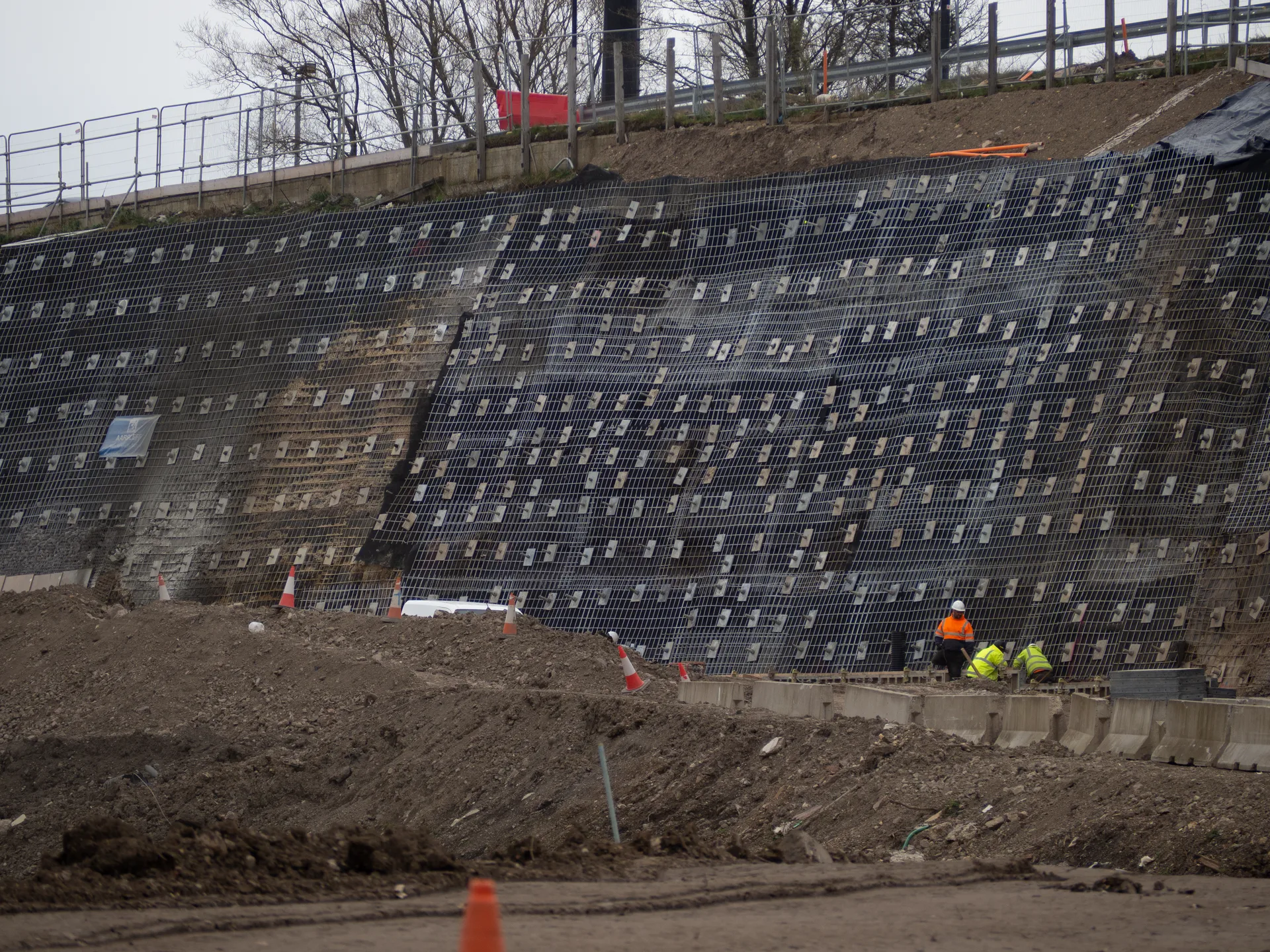
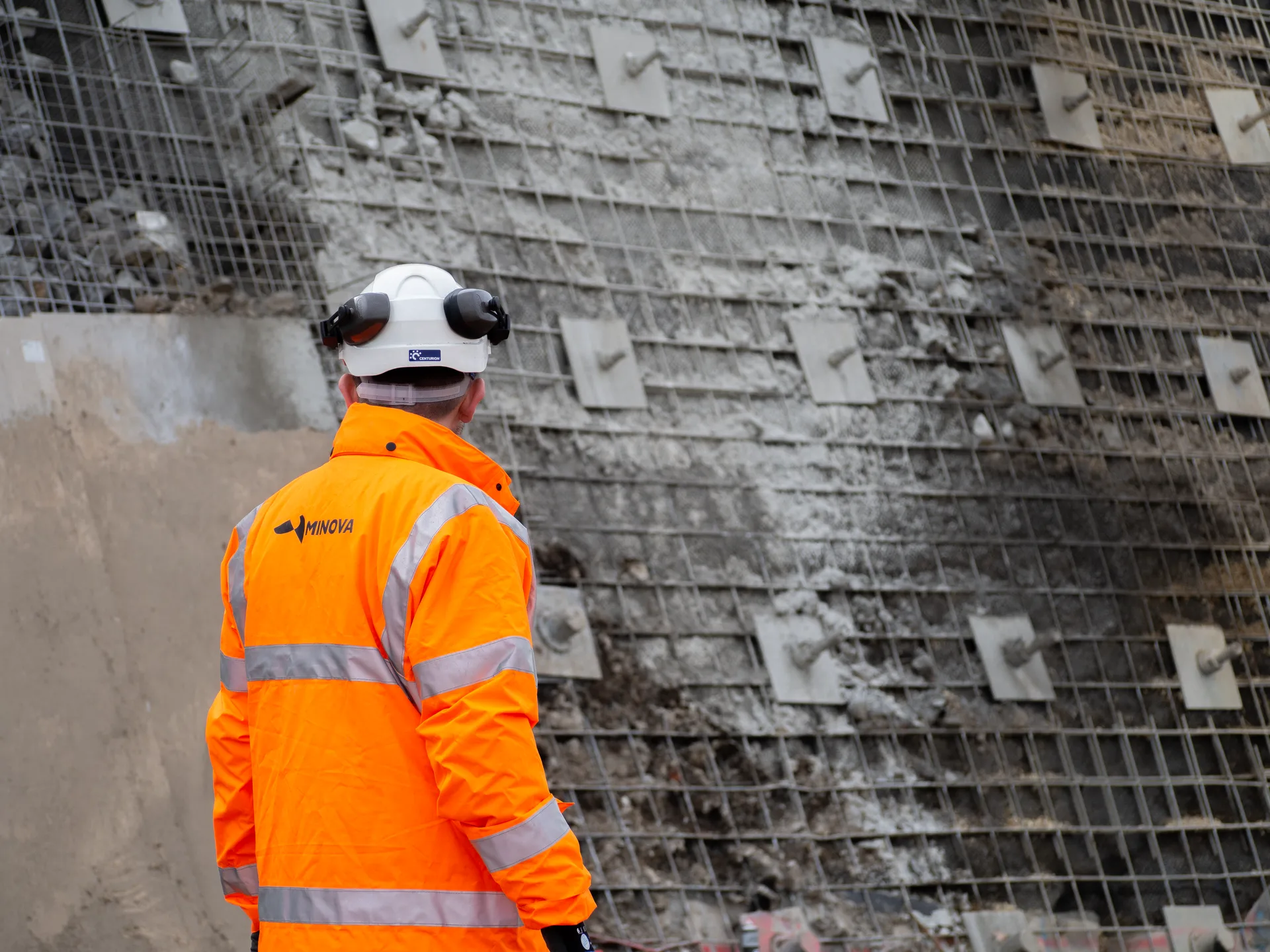
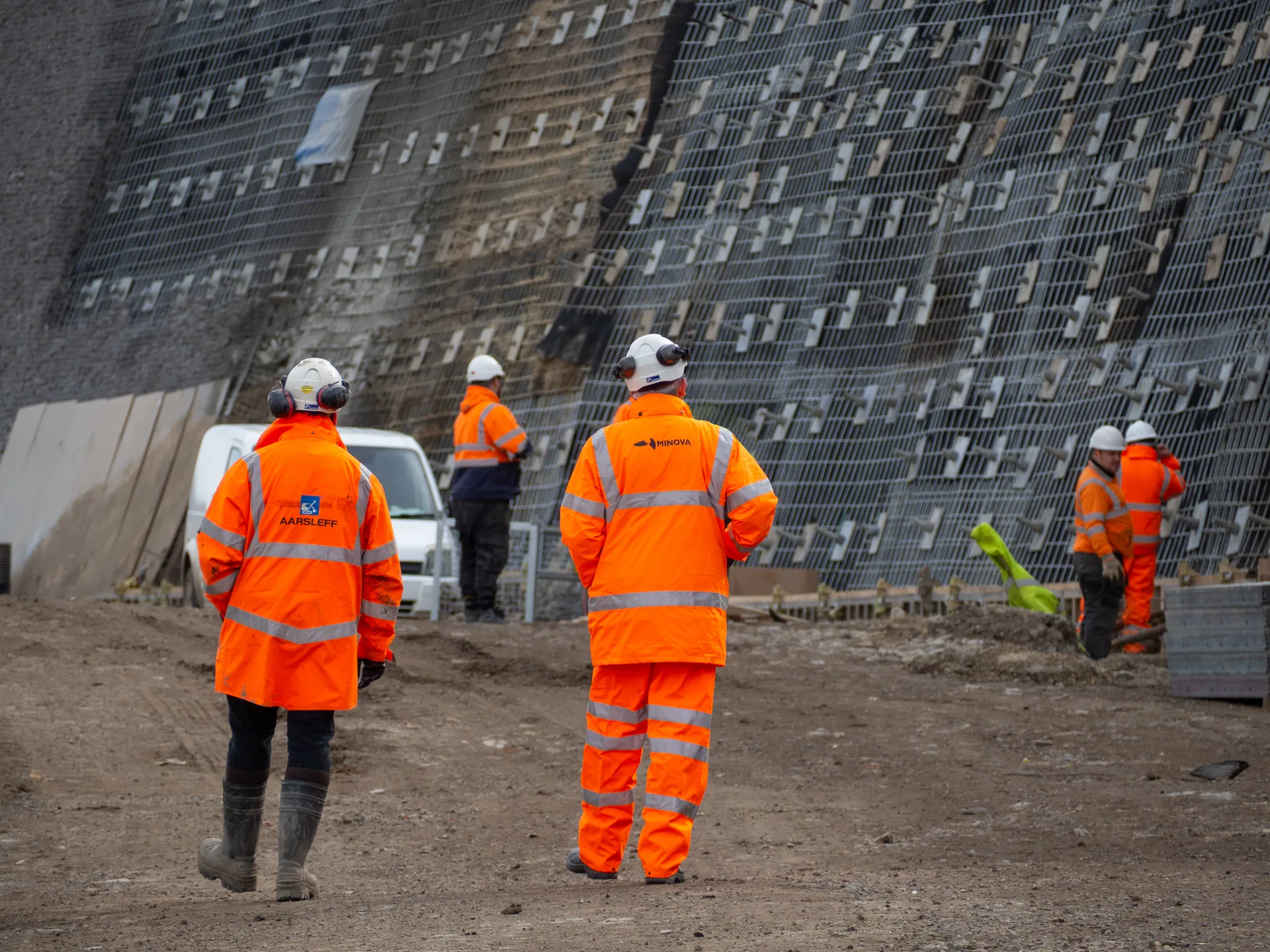
The Sunderland Strategic Transport Corridor (SSTC) was a major scheme to create a continuous dual carriageway between the A19 and Sunderland city centre. The project improved connectivity, reduced congestion, and unlocked land for regeneration. Minova was engaged by Aarsleff Ground Engineering during Phase 3 to install a retaining and slope stabilisation system along a 2km stretch. Running through the former Pallion Shipyard, the terrain presented a 20m height difference at a 70° slope between the road and the neighbouring land which contained asbestos, buried structures, and deep drainage culverts. Ground conditions on the site consisted of overlying alluvium, glacial clay, mudstone, and limestone and historic relics.
Sunderland Strategic Transport Corridor (SSTC), Tyne & Wear – UK
Minova supported the Sunderland Strategic Transport Corridor by delivering high‑performance soil nails and slope stabilisation, ensuring long‑term safety, improved connectivity and regeneration.
Sector / Application
Overview
Solution
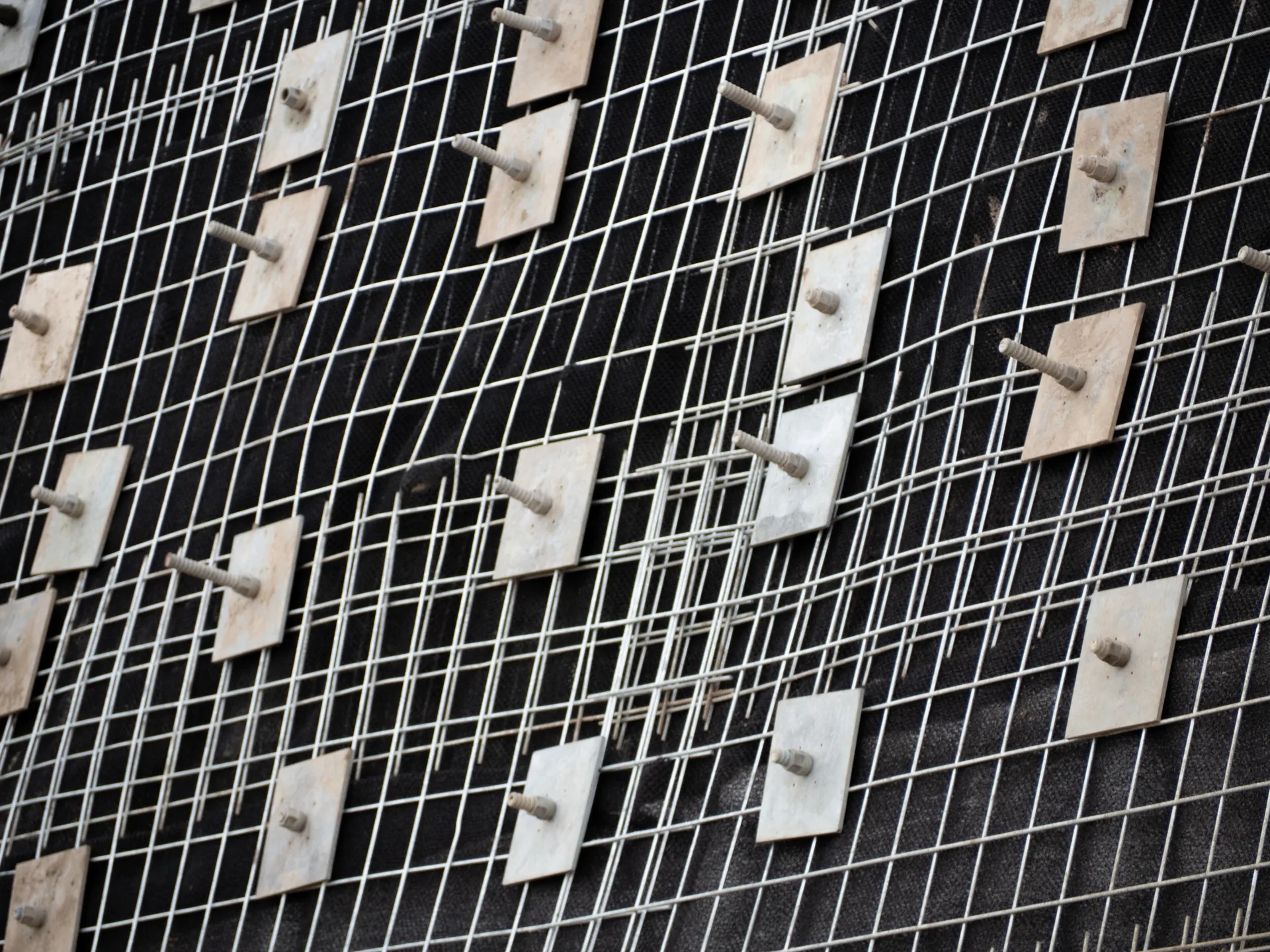
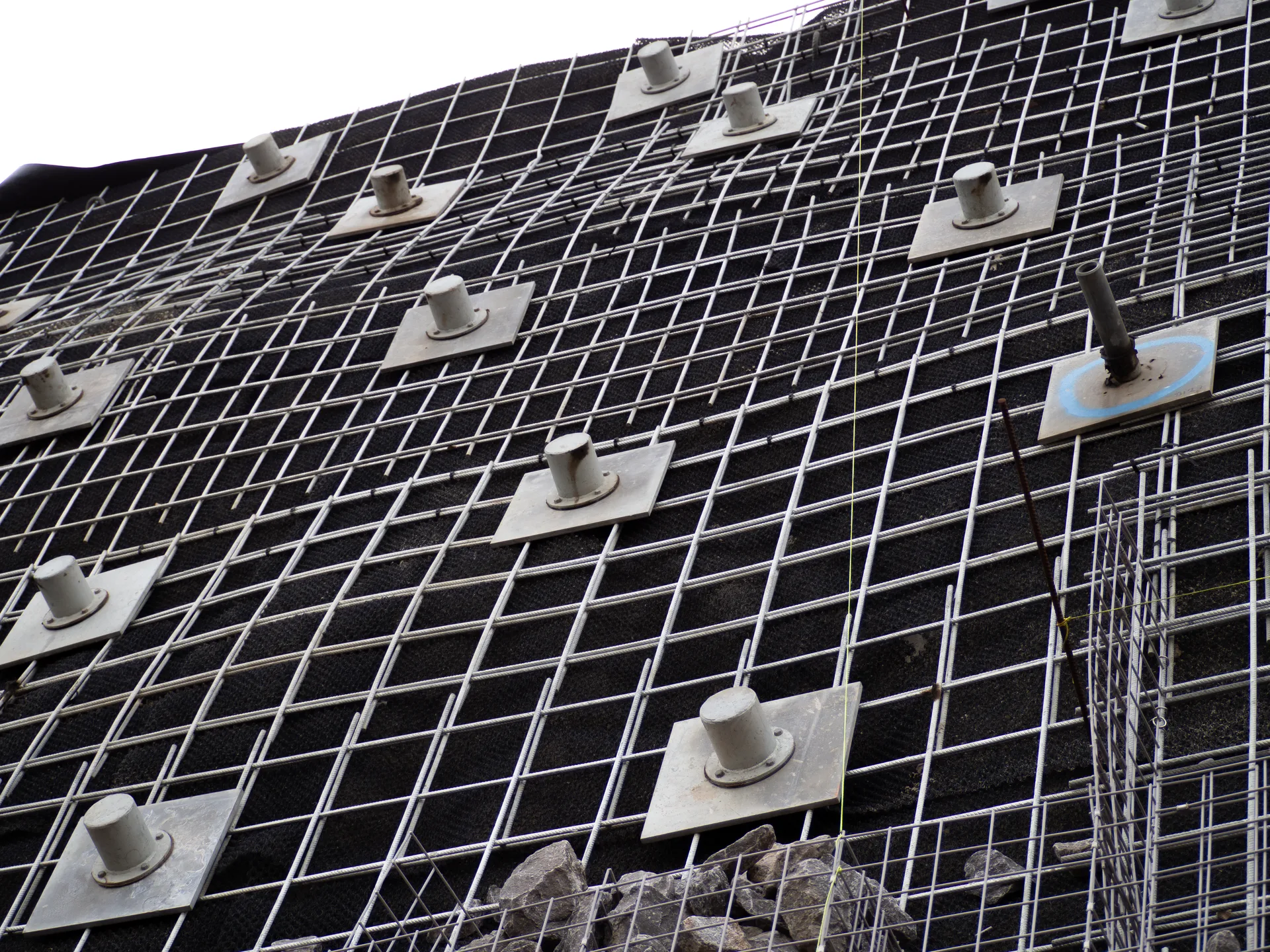
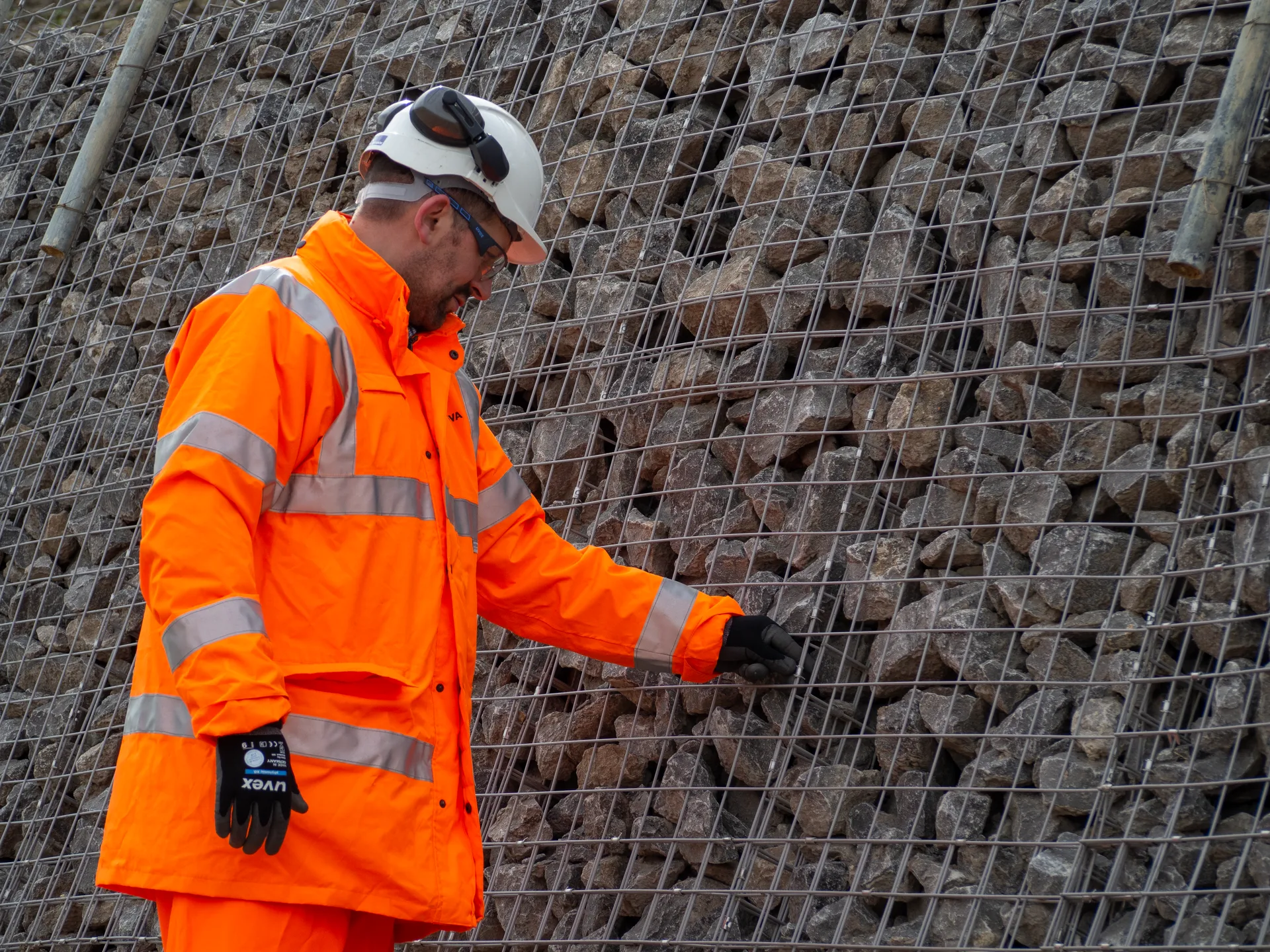
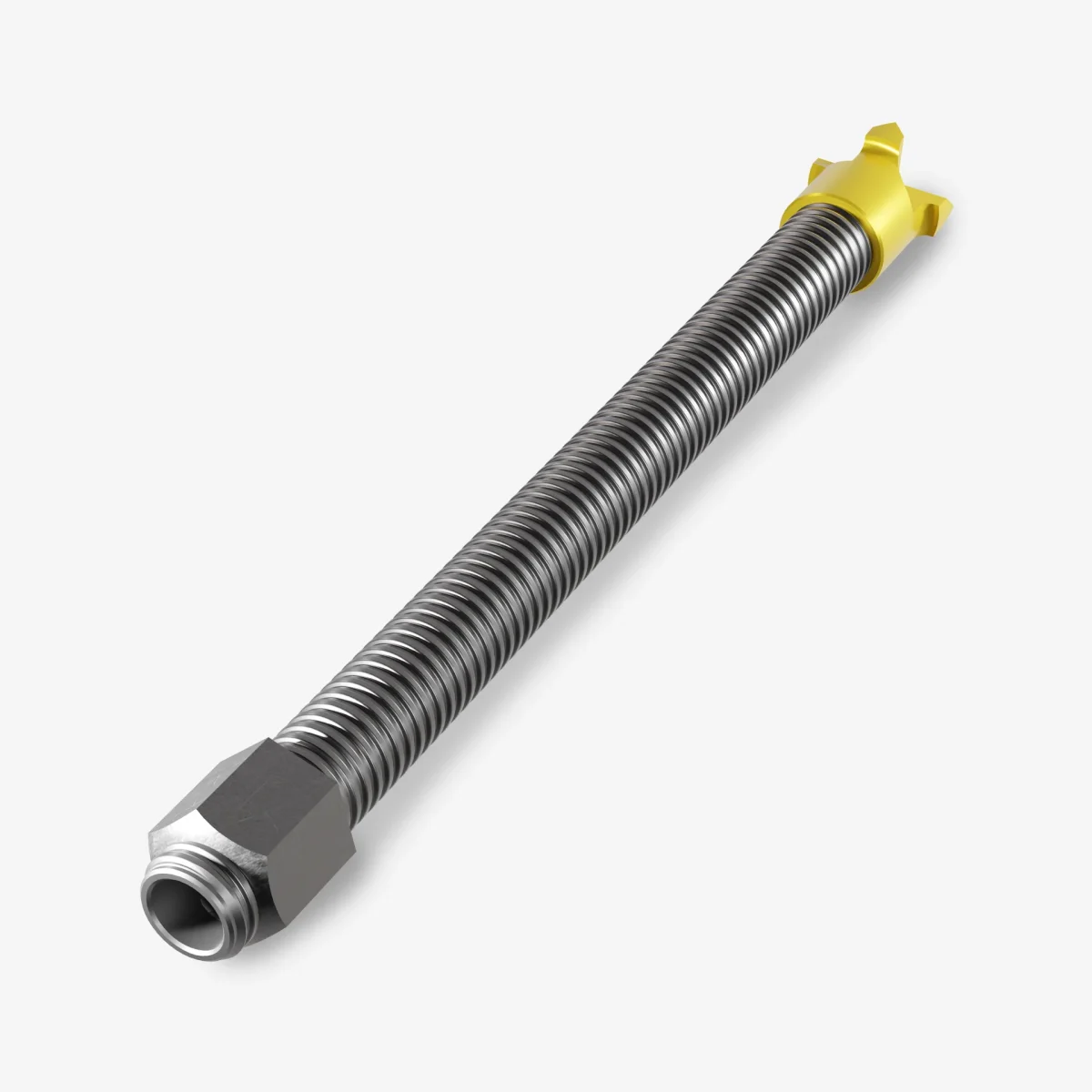
To stabilise the embankment Minova supplied 1,713 soil nails 38-51mm in diameter, coupled with structural mesh, and a PVC-coated facing system. This provided support to a 2,000m2 area with a 120-year design life – becoming the largest soil nail wall constructed by Aarsleff to date. Aarsleff’s Ground Engineering Geotechnical Contract Manager added “I believe these are some of the highest performance soil nails in the UK, for specification and design life and what we’re expecting them to do”. While Minova’s Sales Manager, Lee Hudson, remarked that “this was a great opportunity for Minova to work closely with the Aarsleff team and help to deliver this technically challenging scheme with our wide range of geotechnical products”. The Minova solution guaranteed the safety of workers and once completed ensured the long-term stability of the slope, whilst providing the desired aesthetic finish.