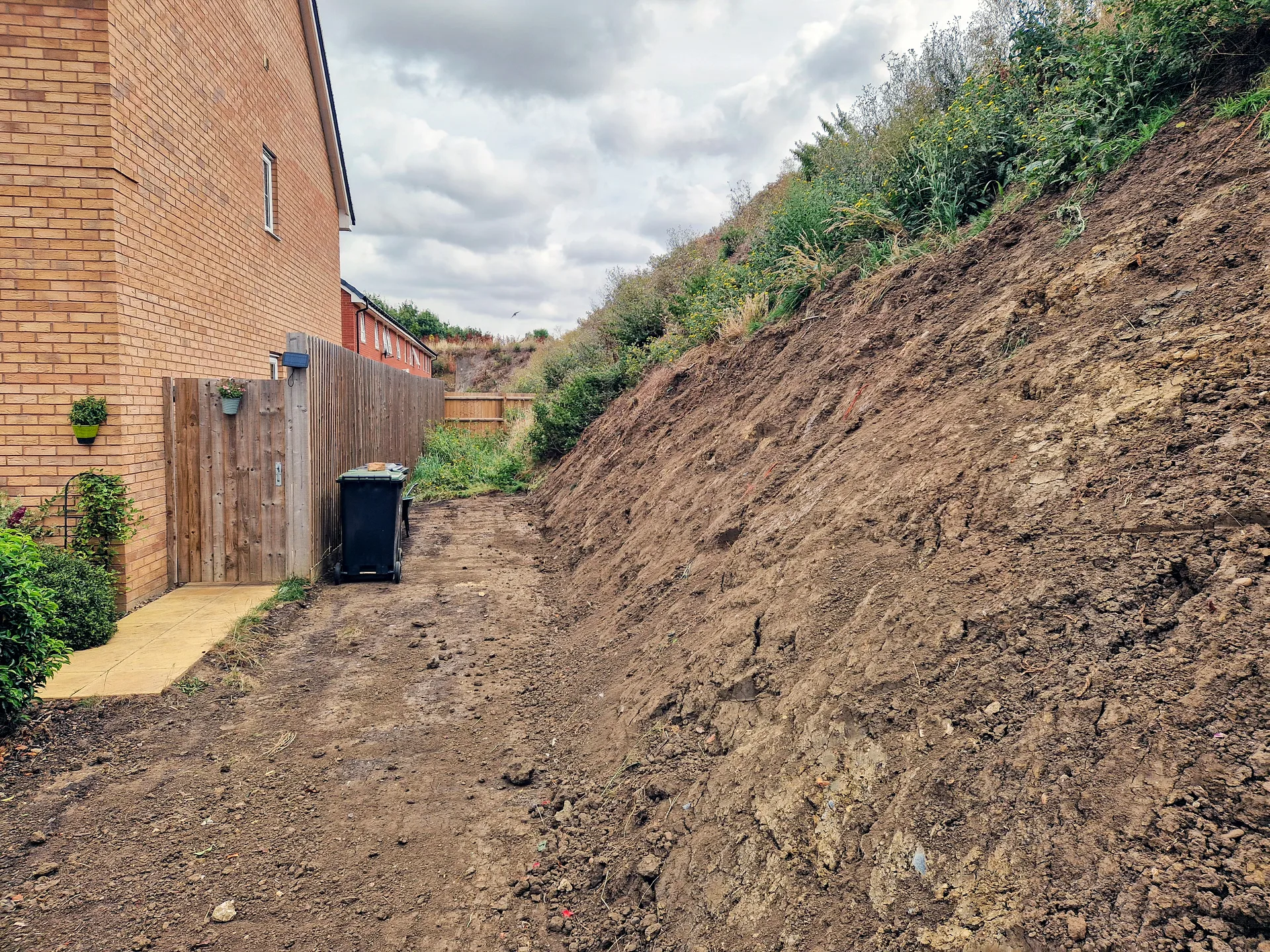
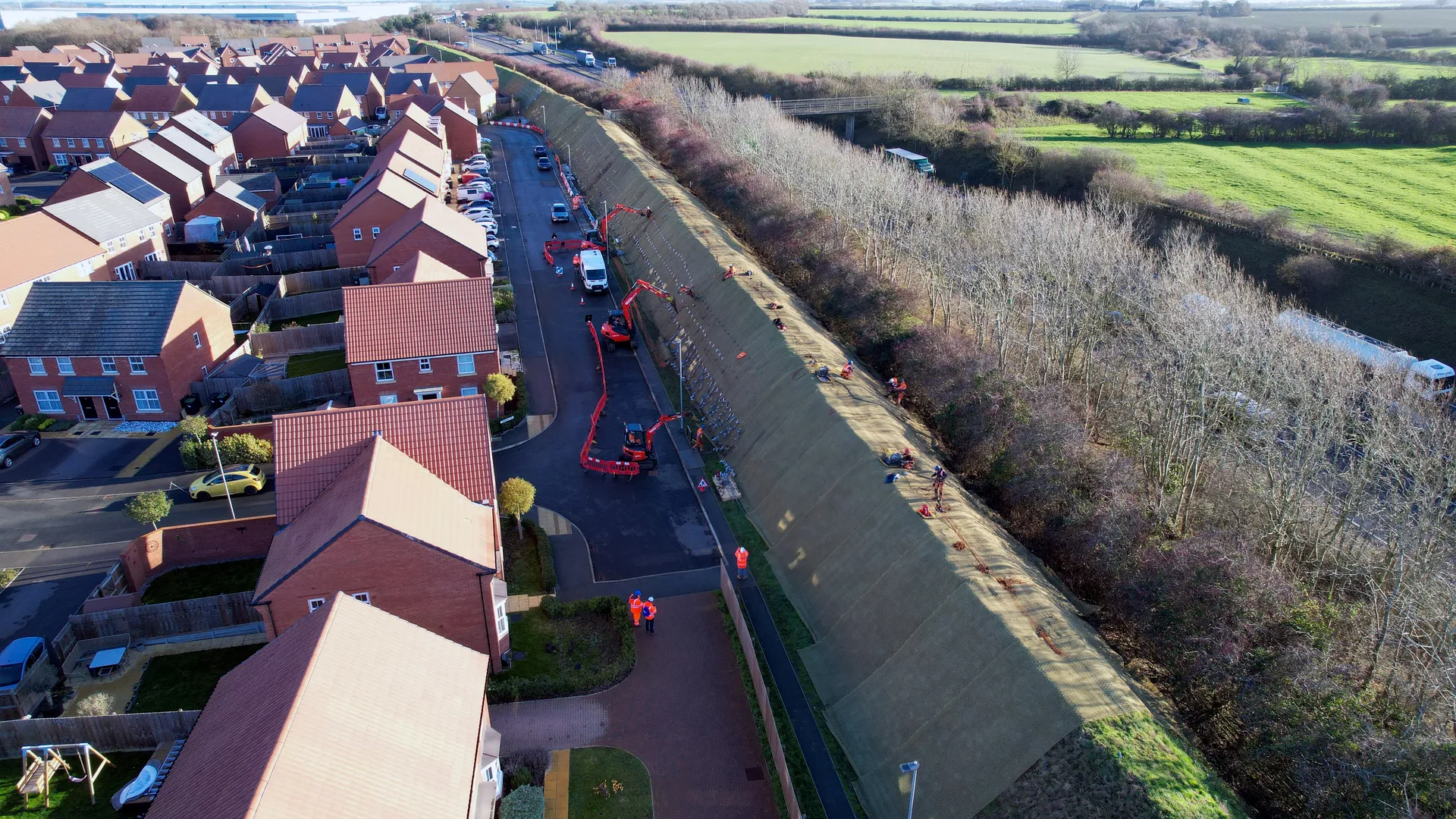
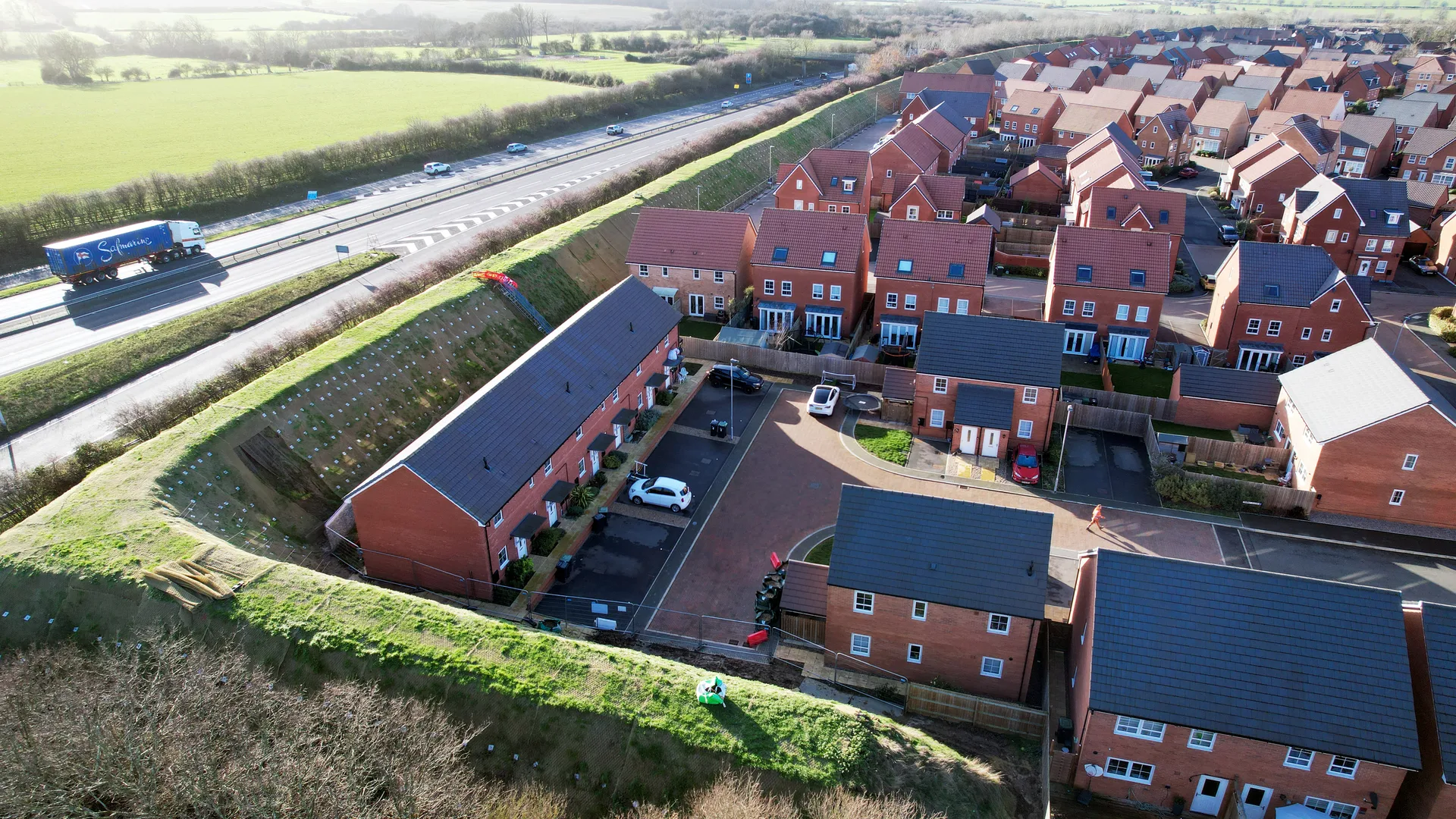
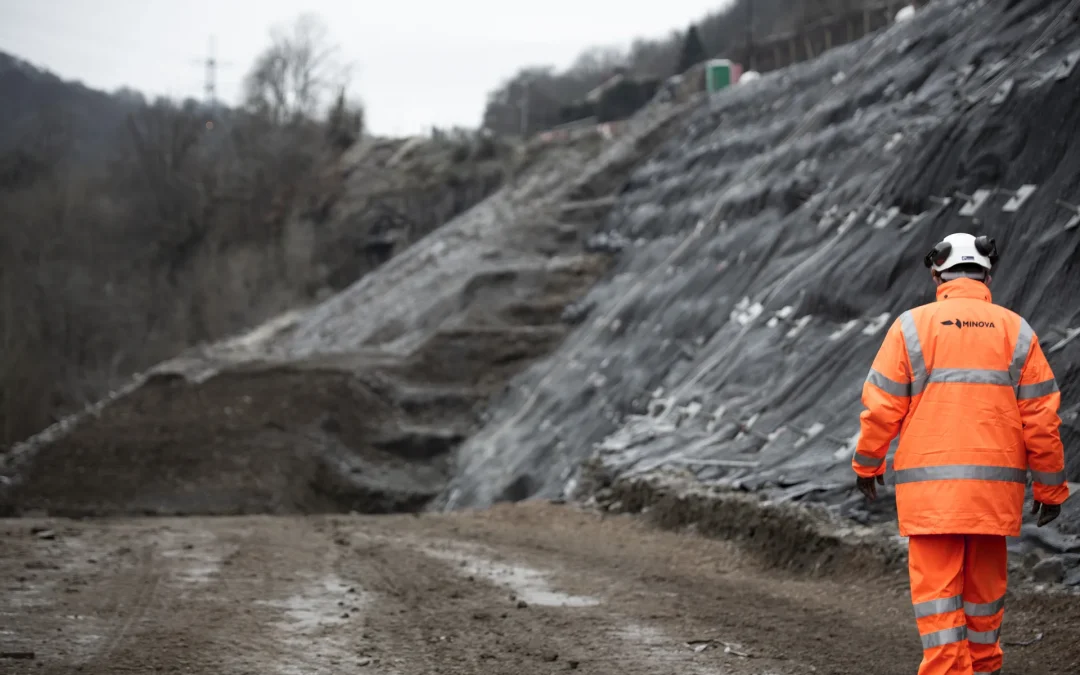
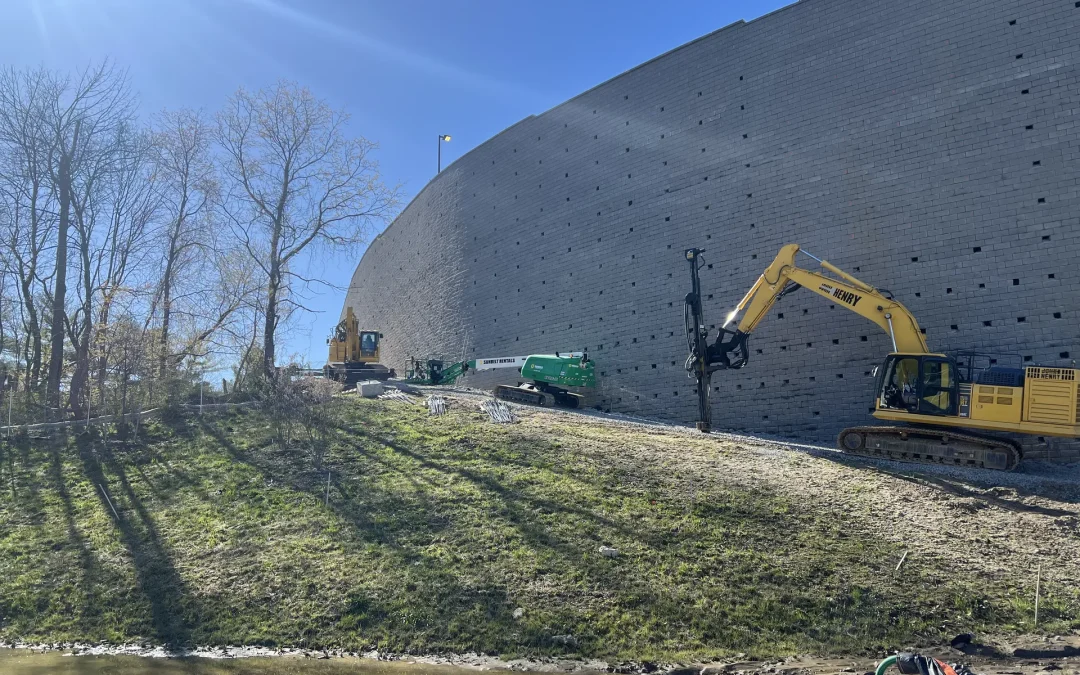
A noise attenuation bund between the A14 and a new housing development raised concerns over its long-term stability. This Long Linear Asset varied between 5-6m high, with a total linear extent of 500m and steep slope angles up to 70°. The bund was formed from site-won soils, including uncompacted clay of poor soil strength. Over time, tension cracks within the surface soils and occasional signs of minor slippages and bulging developed along its length. Intervention was needed to ensure public safety and protect neighbouring properties. The Platipus Low Carbon Anchoring Solution (LCAS®) was chosen for its versatility, given the soil variability and site constraints. As an alternative method, the Platipus System provided immediately quantifiable loads, allowing significant remediation without the need to return to worked areas.
Thrapston Noise Attenuation Bund, Northamptonshire – UK
Low‑carbon anchoring stabilised a 5-6m high A14 noise bund, delivering long‑term slope stability, drainage and erosion control with minimal disruption for nearby homes.
Sector / Application
Overview
Solution
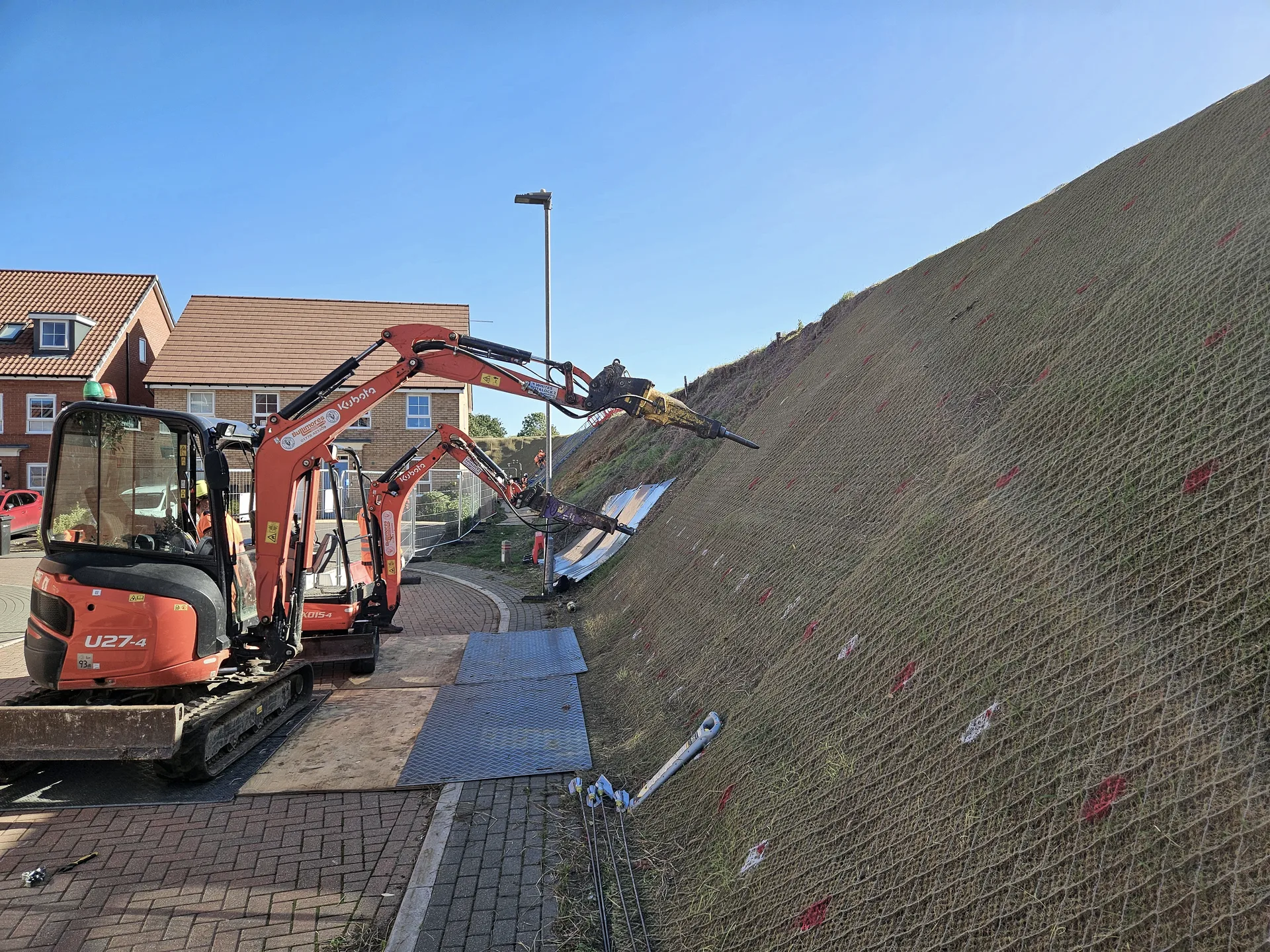
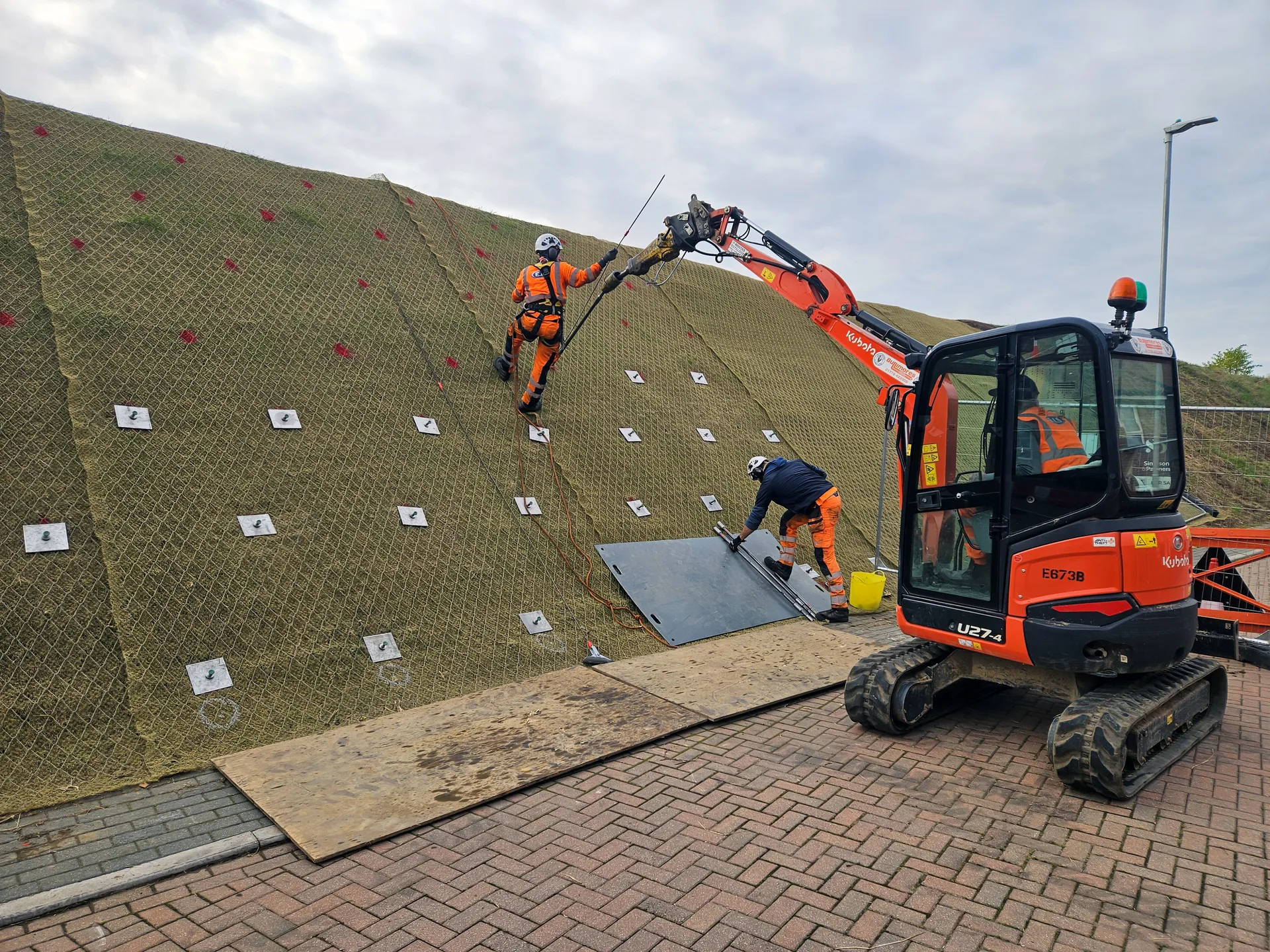
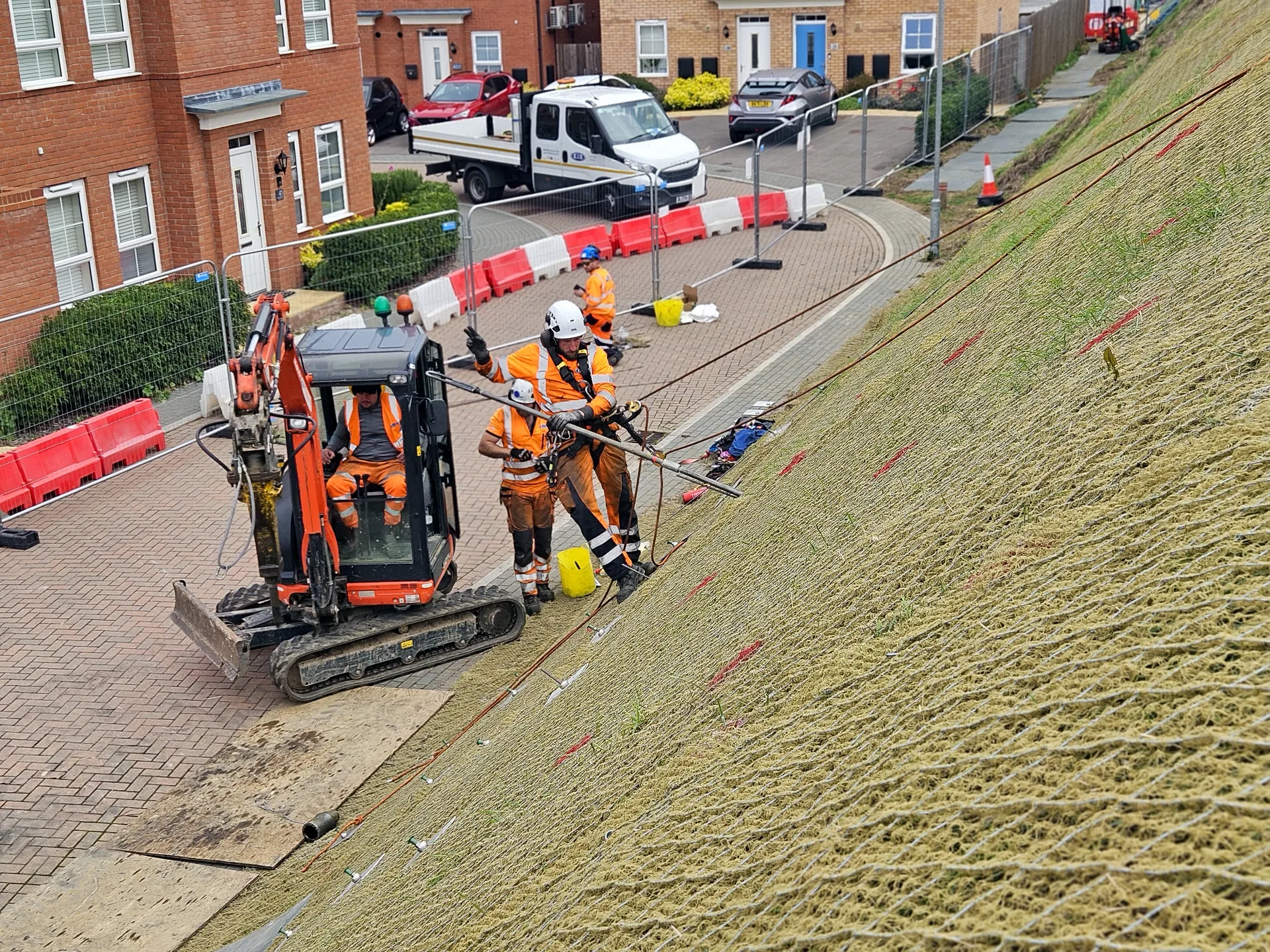
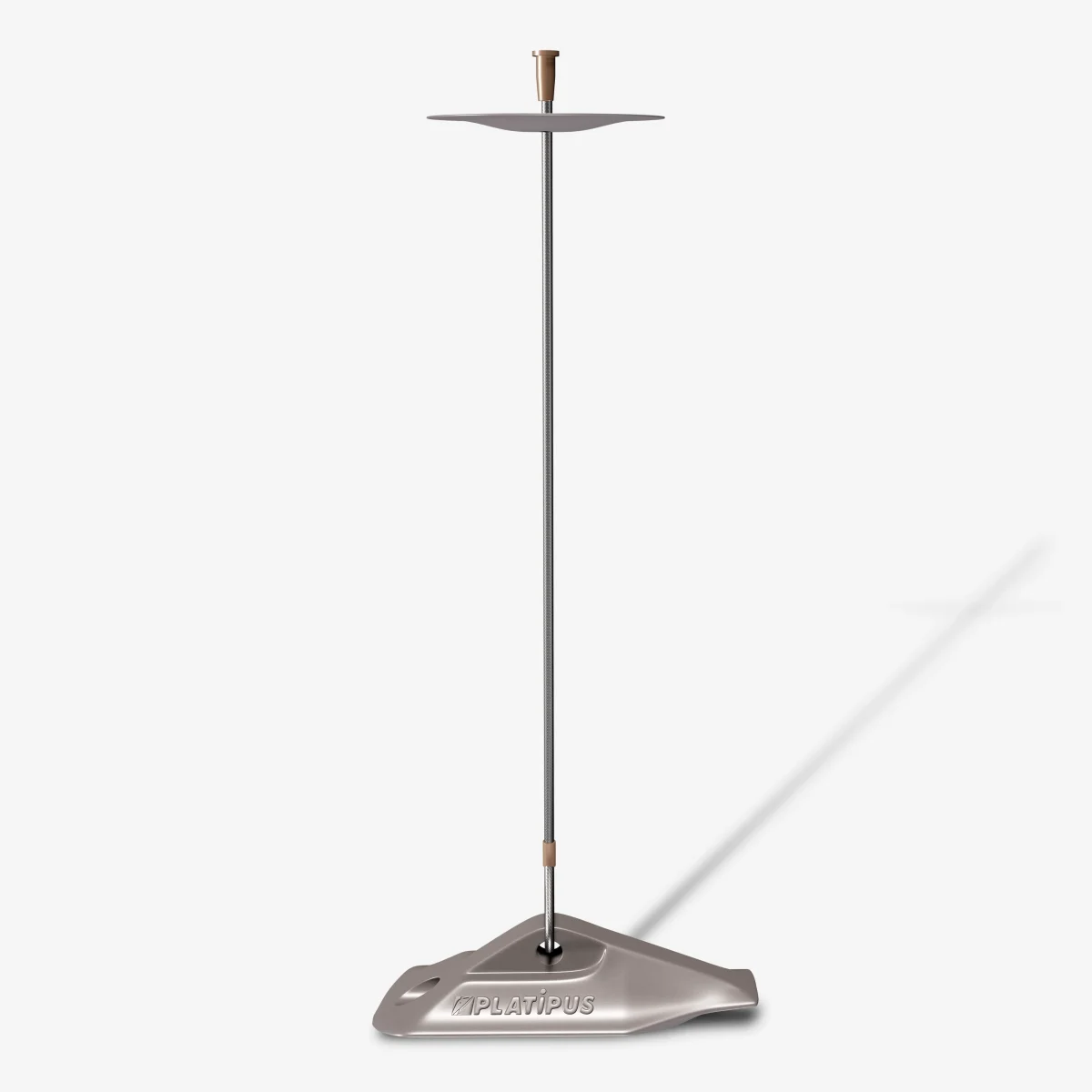
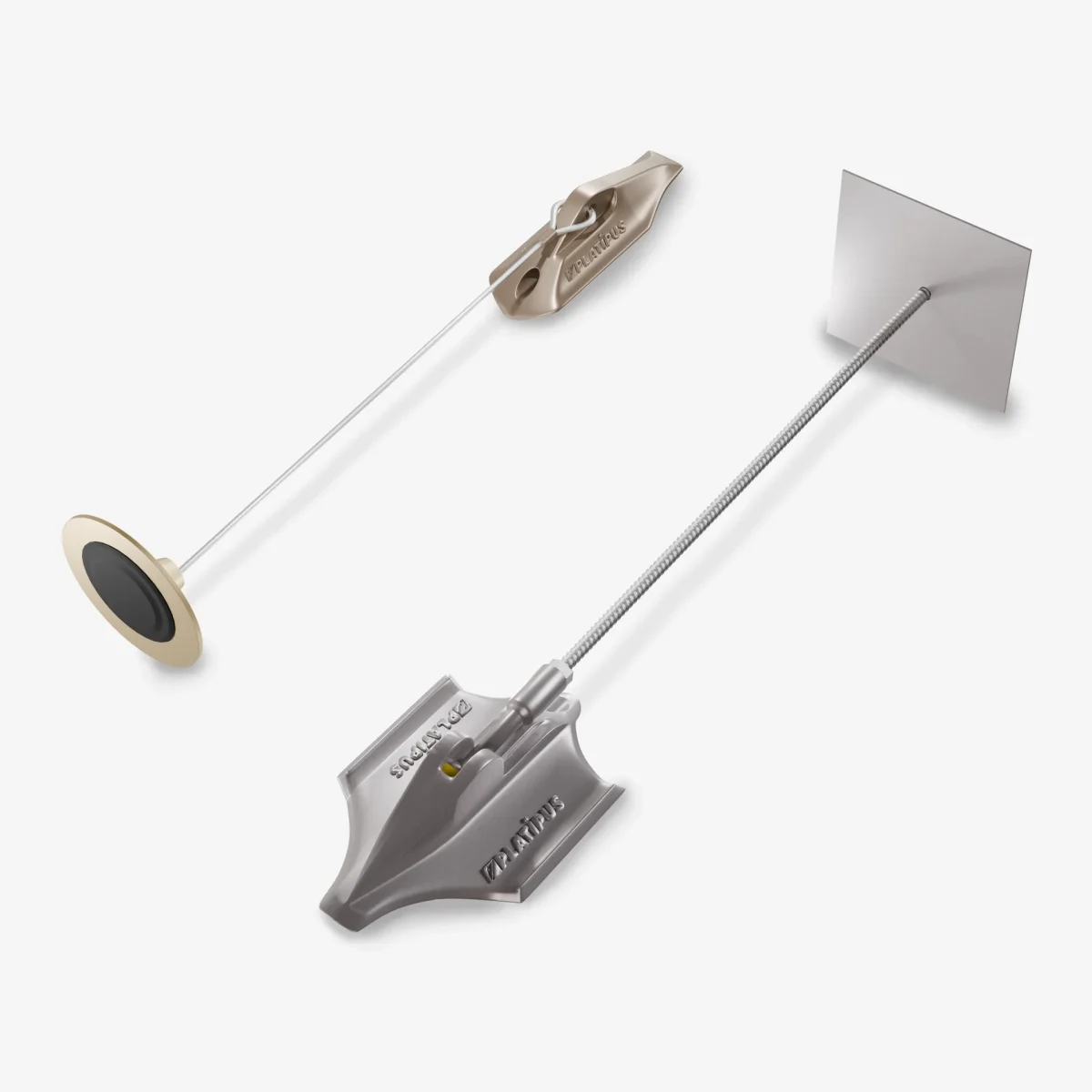
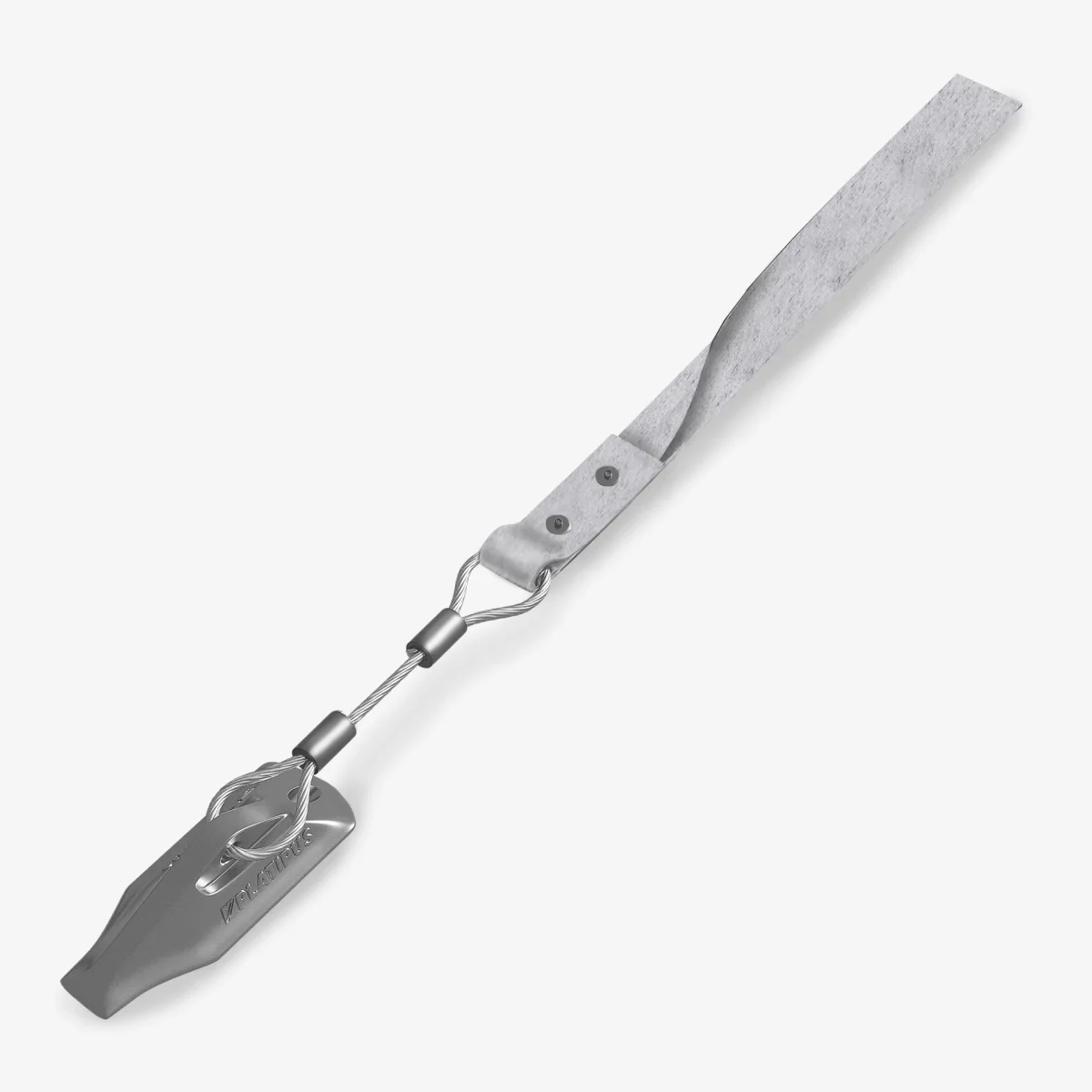
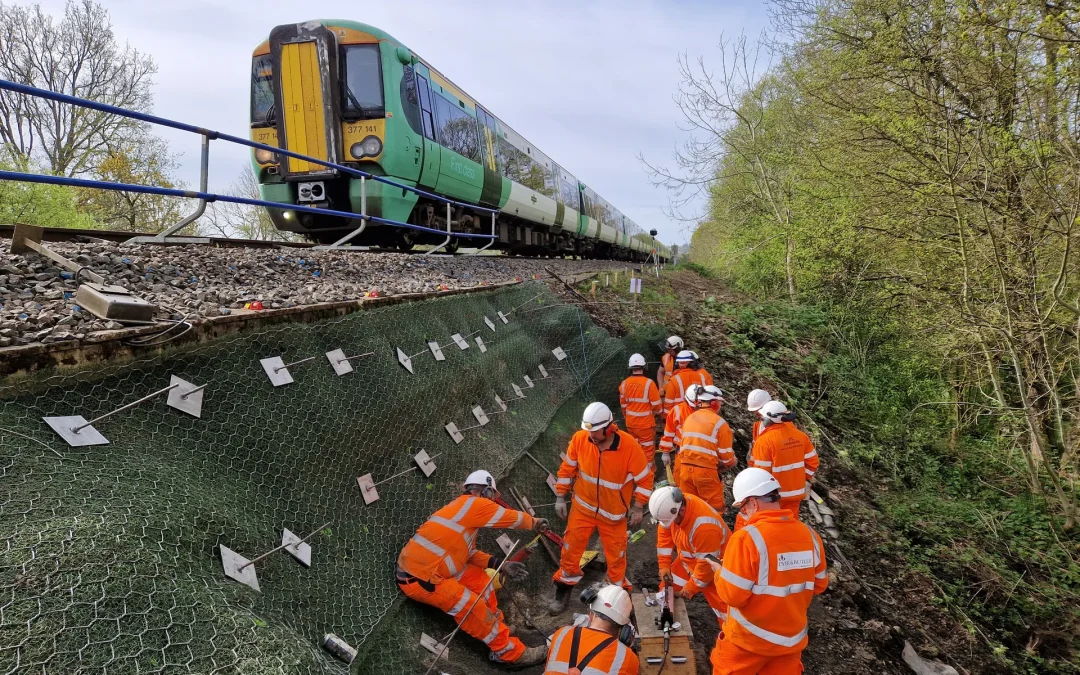
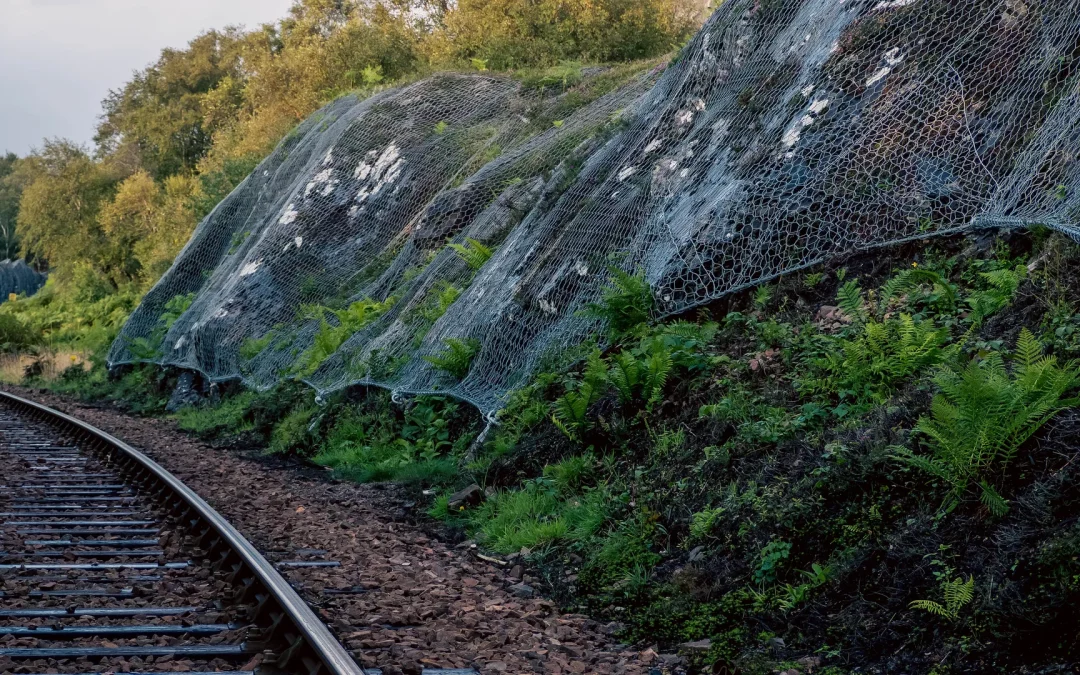
The stabilisation approach needed to minimise disruption while providing a cost-effective and sustainable method to stabilise the bund. Following the strimming of vegetation, 4,000 Percussion Driven Earth Anchors (PDEA®) with a 60-year design life were driven perpendicular to the slope face to alternating 3.5m and 4.5m depths. Installation required a combination of hand-held tools and tracked excavators with specialist rope access to overcome site constraints. Each anchor was proof tested with a design load of 20kN, ensuring intimate contact of the geotextile with the soil surface, preventing shallow seated failures, surface washout and wind erosion. The facing material was draped over the bund and terminated with two rows of anchors driven vertically due to space constraints not allowing conventional anchoring trenches. To further improve stability, two rows of Plati-Drain™ were driven at a 5° inclination at the toe of the slope to provide long-term drainage to reduce pore water pressure. The result was a cost-effective and environmentally sensitive solution to stabilise the bund, improve resilience, restore appearance through revegetation, and provide peace of mind for nearby residents.